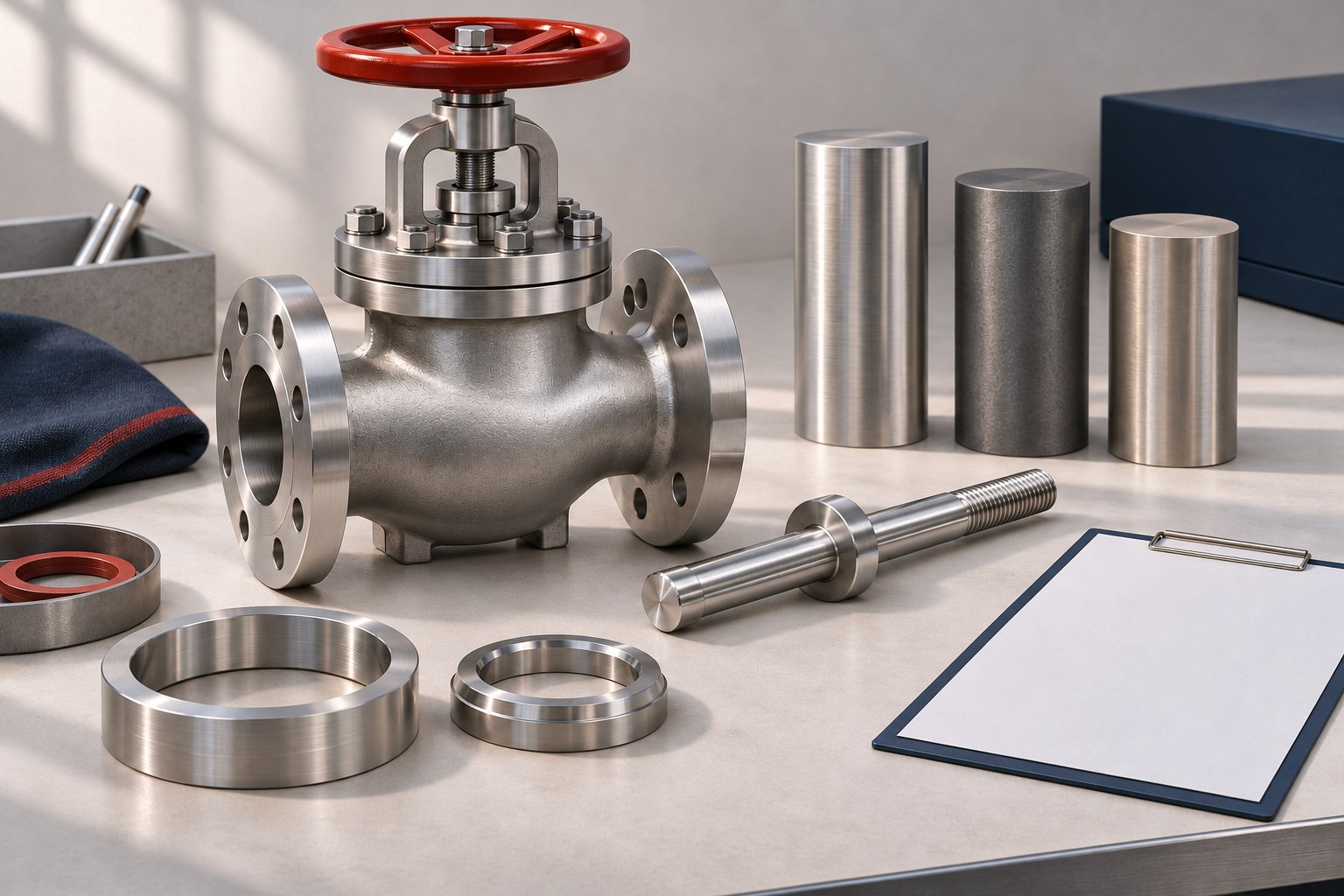
A finished valve can look correct while leaving important material questions unanswered. Buyers need confidence in the body, internal components, sealing materials and supporting records. For valve manufacturers in China, a clear chain of identification makes quality easier to demonstrate and problems easier to investigate.
Specify materials by component and duty
A broad description such as “stainless steel valve” does not define a complete construction. The technical specification should identify the required grades for relevant components, along with the seat, packing, gasket, lining or coating where applicable. Material selection should be reviewed against the fluid composition, temperature, pressure and expected operating conditions.
Do not treat one material as a universal solution. A material suitable for one concentration or temperature may be unsuitable in another service. When process data is incomplete, record the uncertainty and obtain an engineering review before confirming the configuration.
Connect incoming parts to their documents
Incoming inspection should compare the purchase specification, component identification and supplied material records. Check that the grade, heat or batch identification, dimensions and required test information correspond to the supplied items. A certificate that cannot be linked to the material in the workshop leaves a gap in the evidence.
The scope of additional verification should follow the contract and the risk of the application. Where positive material identification is specified, define its coverage, method and acceptance criteria. It should not be treated as a substitute for every other required material property or inspection record.
Preserve identification through manufacturing
Cutting, machining and surface treatment can remove original markings. Plan how identification will be retained or transferred using an approved method appropriate to the component. Keep different grades and unverified items clearly separated. Record which material batches are used in the relevant production order or finished assembly.
Traceability should support a useful answer to a practical question: if a material issue is discovered later, which valves may be affected? The records should allow the team to identify the relevant population without relying on memory.
Include bought-in components
Seals, fasteners, actuators and accessories also need purchasing controls. Define the approved specification and review substitutions before assembly. Where shelf life or storage conditions apply, include those requirements in receiving and stock management. Protect identification labels so they remain readable until installation.
Prepare a readable material record package
- An agreed component and material list.
- Applicable material certificates linked to component or batch identifiers.
- Required supplementary verification reports.
- Approved substitutions and deviation records, if any.
- A clear connection between the supplied valve identifiers and the supporting documents.
Good records are organized for the person receiving the valve. Use consistent identifiers across the nameplate, packing list and document index, and make discrepancies easy to resolve before shipment.
Reliable Chinese valve manufacturing depends on controlled materials as much as machining capability. For a project review, send DQSV the process medium, operating conditions and required material documentation. You can also browse the valve product range before preparing your inquiry.
Material suitability and verification requirements must be established for each application. This article does not claim a particular certification or material qualification for every DQSV product.